Eigenvectors and Eigenvalues in 2D Transformations: Animated Visualizations
These animations compare how eigenvector directions and eigenvalues behave across several families of 2D linear transformations.
They show non-symmetric matrices with real eigenvalues, symmetric matrices with orthogonal eigenvector directions, and transformations whose eigenvalues and eigenvectors are complex.
In each animation, the transformation develops continuously from the identity matrix to the displayed matrix.
Real eigenvector directions remain on the same lines throughout the motion, while transformations with complex eigenvalues have no nonzero real direction that stays fixed.
Non-symmetric transformations with real eigenvalues
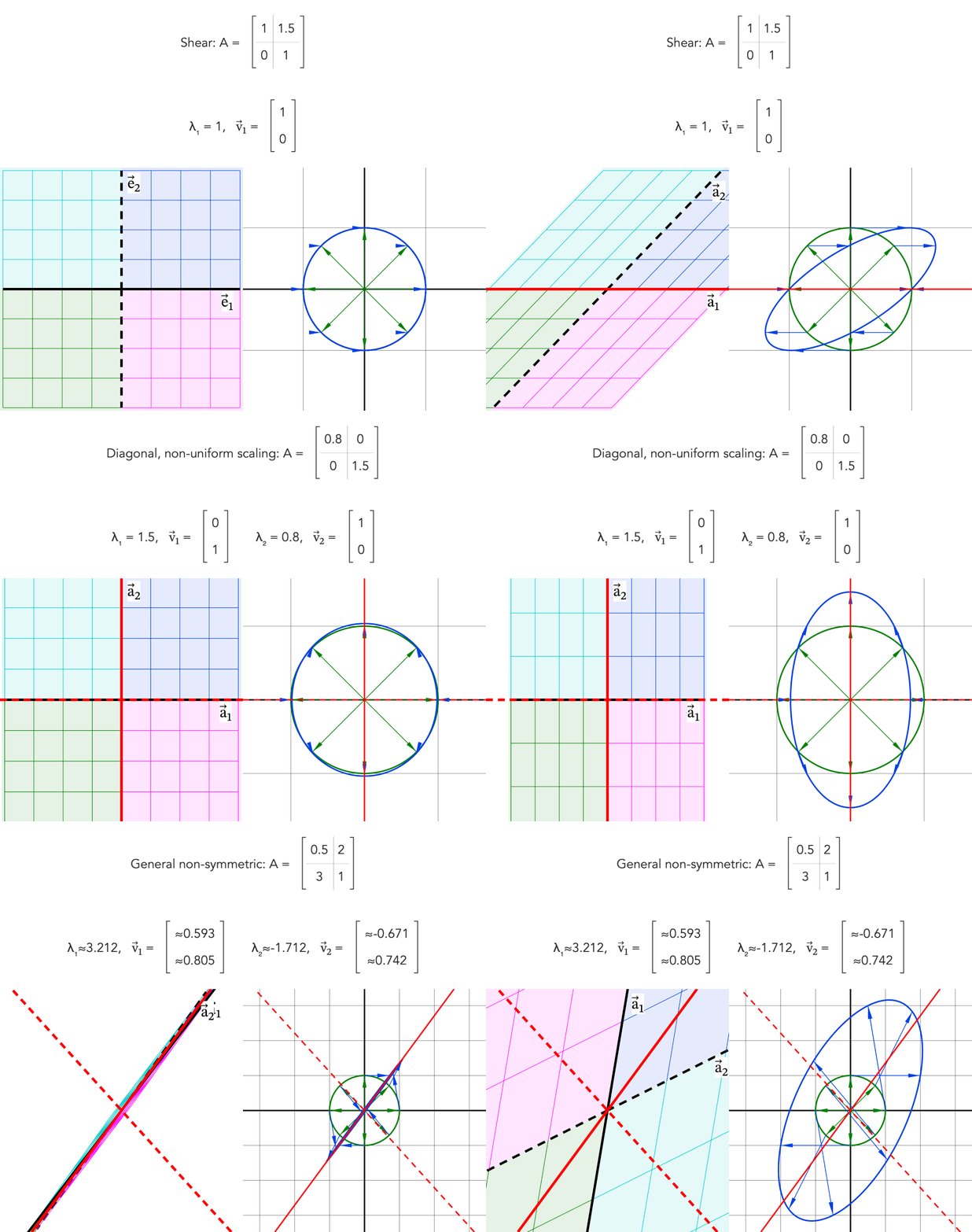
These animations show several non-symmetric matrices whose eigenvalues are real.
Their real eigenvector directions remain on their original lines, but unlike the symmetric case, those directions need not be perpendicular.
The three examples are:
- shear,
- diagonal non-uniform scaling,
- general non-symmetric transformation.
Click the animation to open the full-size version.
Symmetric transformations with real eigenvalues
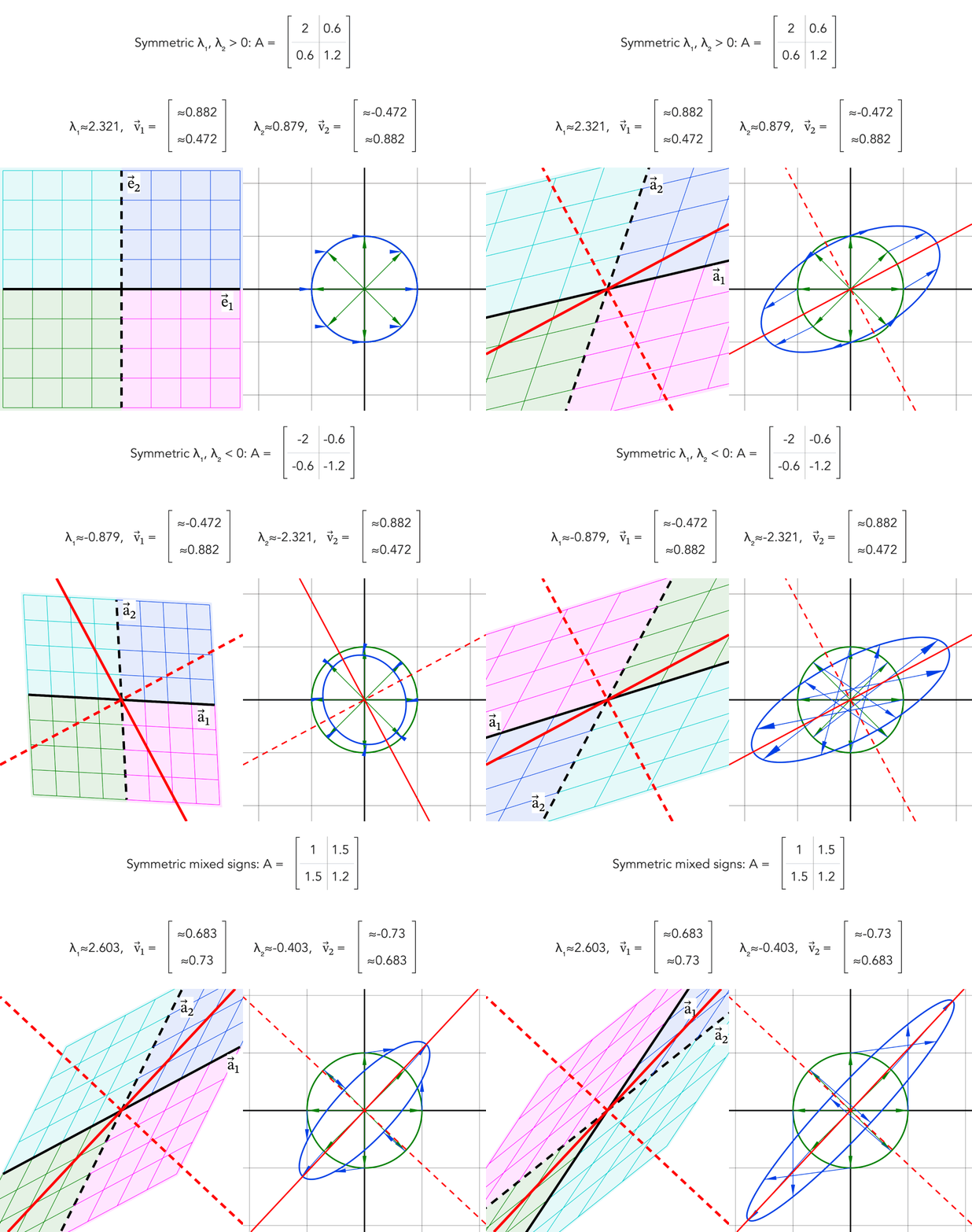
Real symmetric matrices have real eigenvalues and can be described by orthogonal eigenvector directions.
The animation compares three symmetric cases:
- two positive eigenvalues,
- two negative eigenvalues,
- mixed-sign eigenvalues.
These examples show stretching, reversal and combinations of both along perpendicular eigenvector directions.
Click the animation to open the full-size version.
Transformations with complex eigenvalues
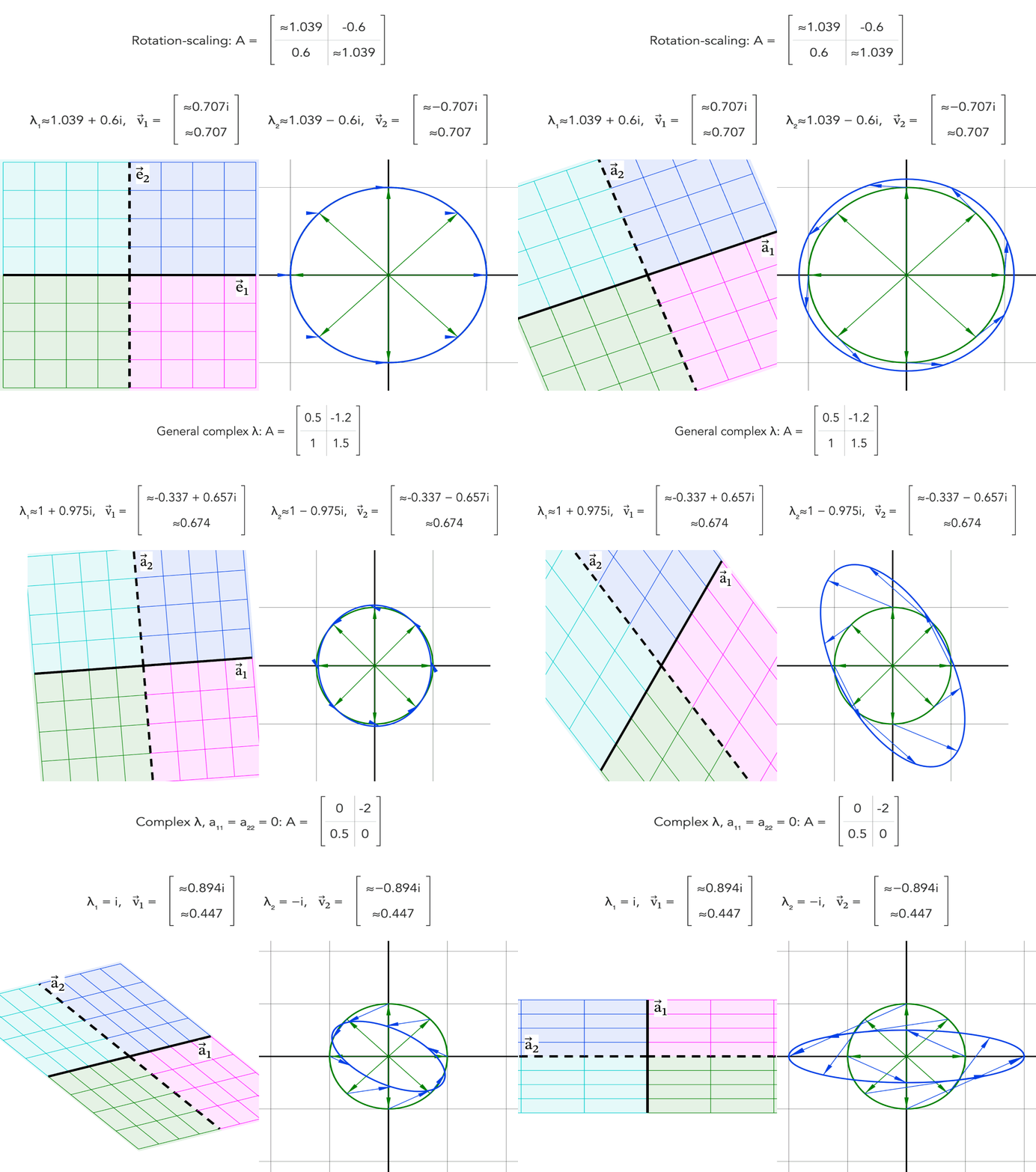
For these real 2D matrices, no nonzero real vector remains on the same line after transformation.
The three examples are:
- rotation-scaling,
- general real matrix with complex eigenvalues,
- zero-diagonal real matrix with complex eigenvalues.
The visible motion combines rotation with scaling or related turning behavior, while the corresponding eigenvalues and eigenvectors are complex.
Click the animation to open the full-size version.
Concept
A real eigenvector satisfies A x⃗ = λx⃗, so its image stays on the same line.
Positive eigenvalues preserve its orientation, negative eigenvalues reverse it, and zero collapses it.
When a real 2D matrix has only complex eigenvalues, no nonzero real vector satisfies this condition.
Structure
The three animation groups emphasize different geometric structures:
non-symmetric matrices may have nonorthogonal real eigenvector directions;
symmetric matrices have orthogonal real eigenvector directions;
and complex-eigenvalue transformations have no real invariant line.