Linear Equations
When does A x = b have one solution, no solution or infinitely many solutions?
This chapter presents linear equation systems in matrix form and vector form, compares them with matrix multiplication, solves them using reduced row echelon form and develops the three cases: unique solution, no solution and infinitely many solutions.
Key ideas
A linear system can be read in two complementary ways: as a column-combination problem and as a set of row constraints.
- The equation A x = b asks whether b can be built as a linear combination of the columns of A
- The augmented matrix [ A | b ] packages the whole system into one object that can be simplified by row operations
- Reduced echelon form reveals whether a solution exists and whether variables are pivot or free
- Unique, inconsistent and infinite-solution cases arise from the relation between the columns of A and the target vector b
- In the infinite-solution case, every solution is a particular solution plus a homogeneous direction in null(A)
The chapter develops both algebraic and geometric viewpoints, then connects the infinite-solution case to the decomposition of the domain into row space and null space.
What does the equation A x = b really mean?
It means that b must be expressible as a linear combination of the columns of A, with coefficients given by x. In the row view, the same system becomes a set of dot-product constraints that the unknown vector x must satisfy.
Related chapters
Examples with visualizations
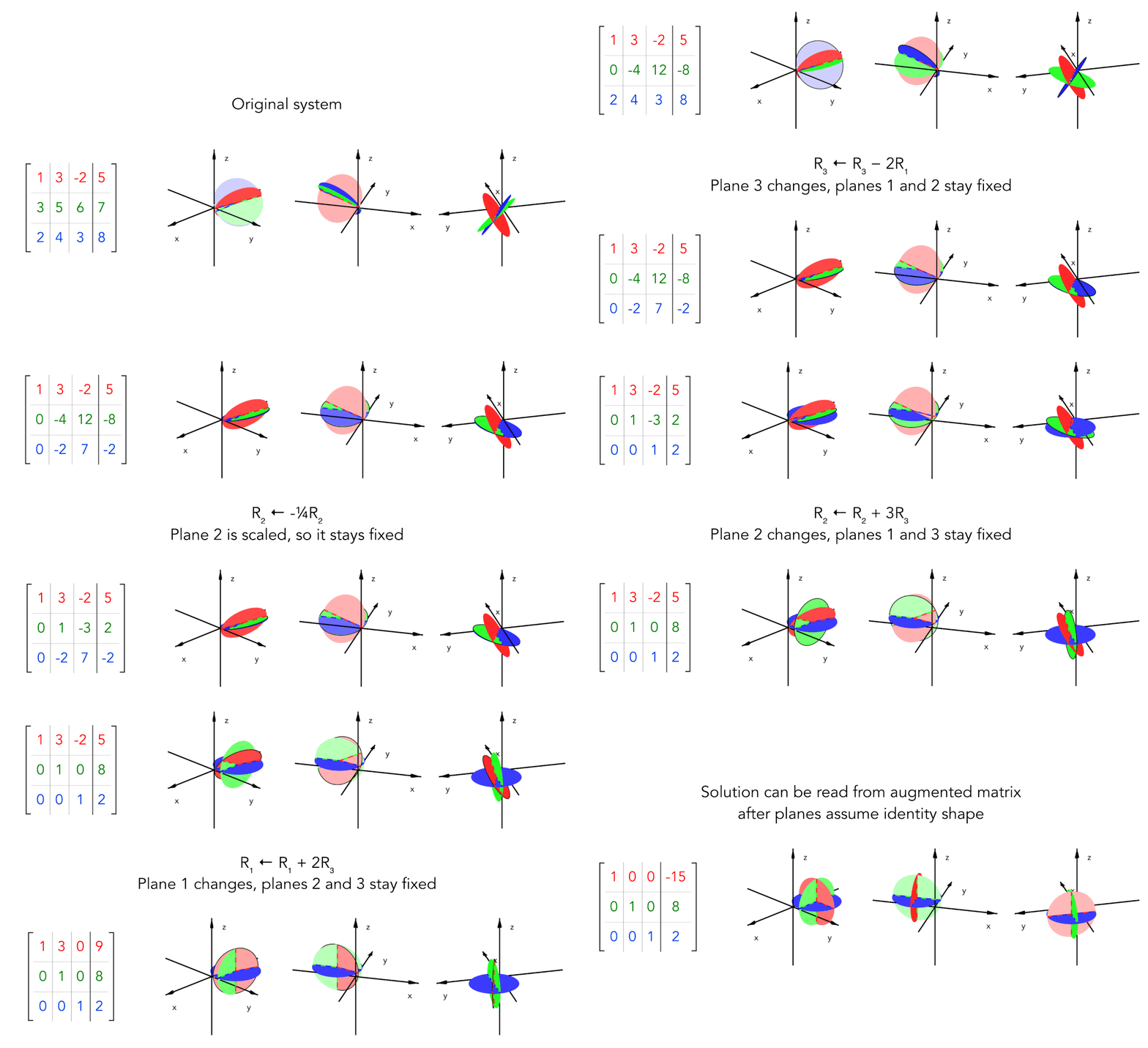
Overview of a 3D system
An augmented matrix and three complementary views of the original planes
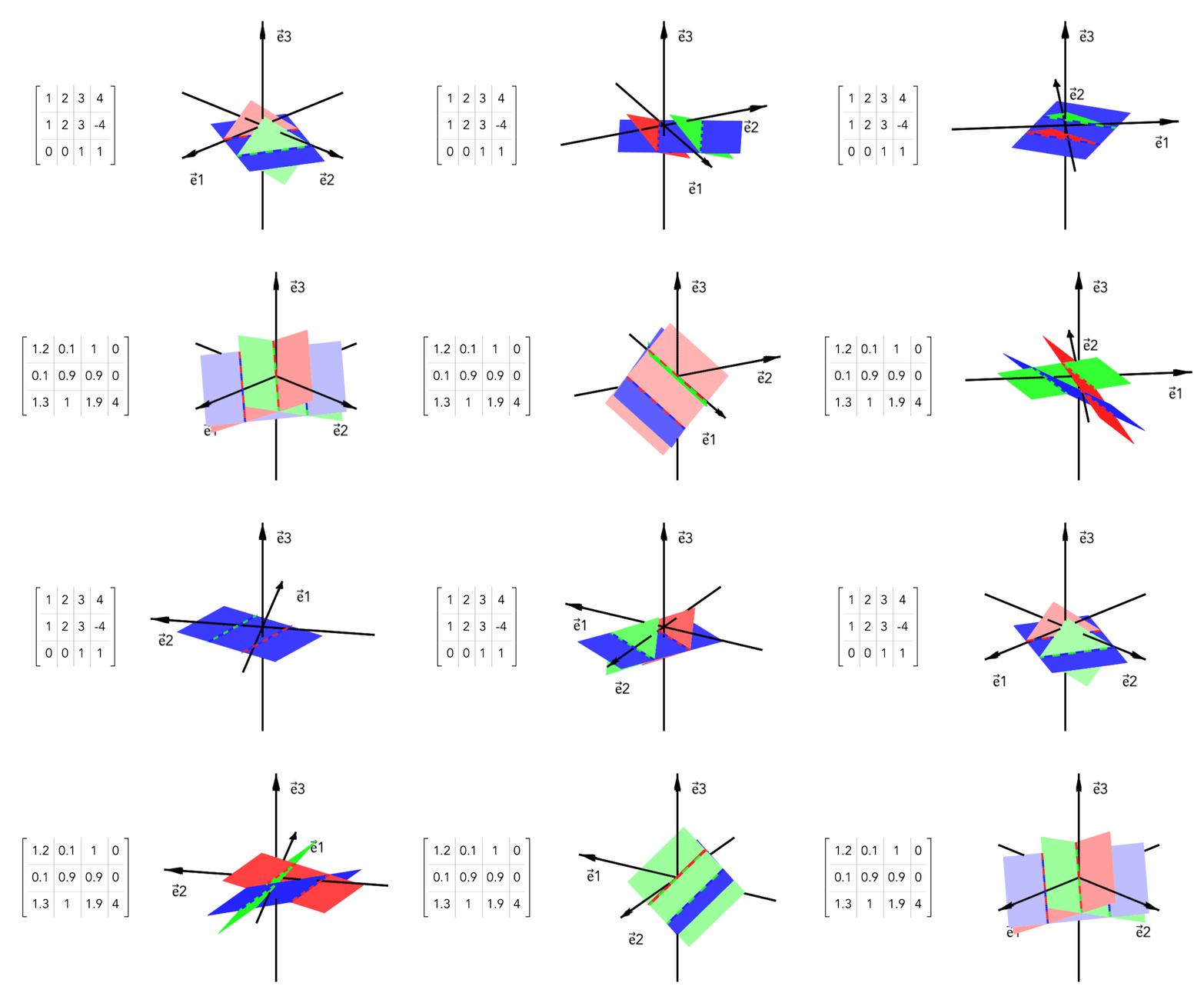
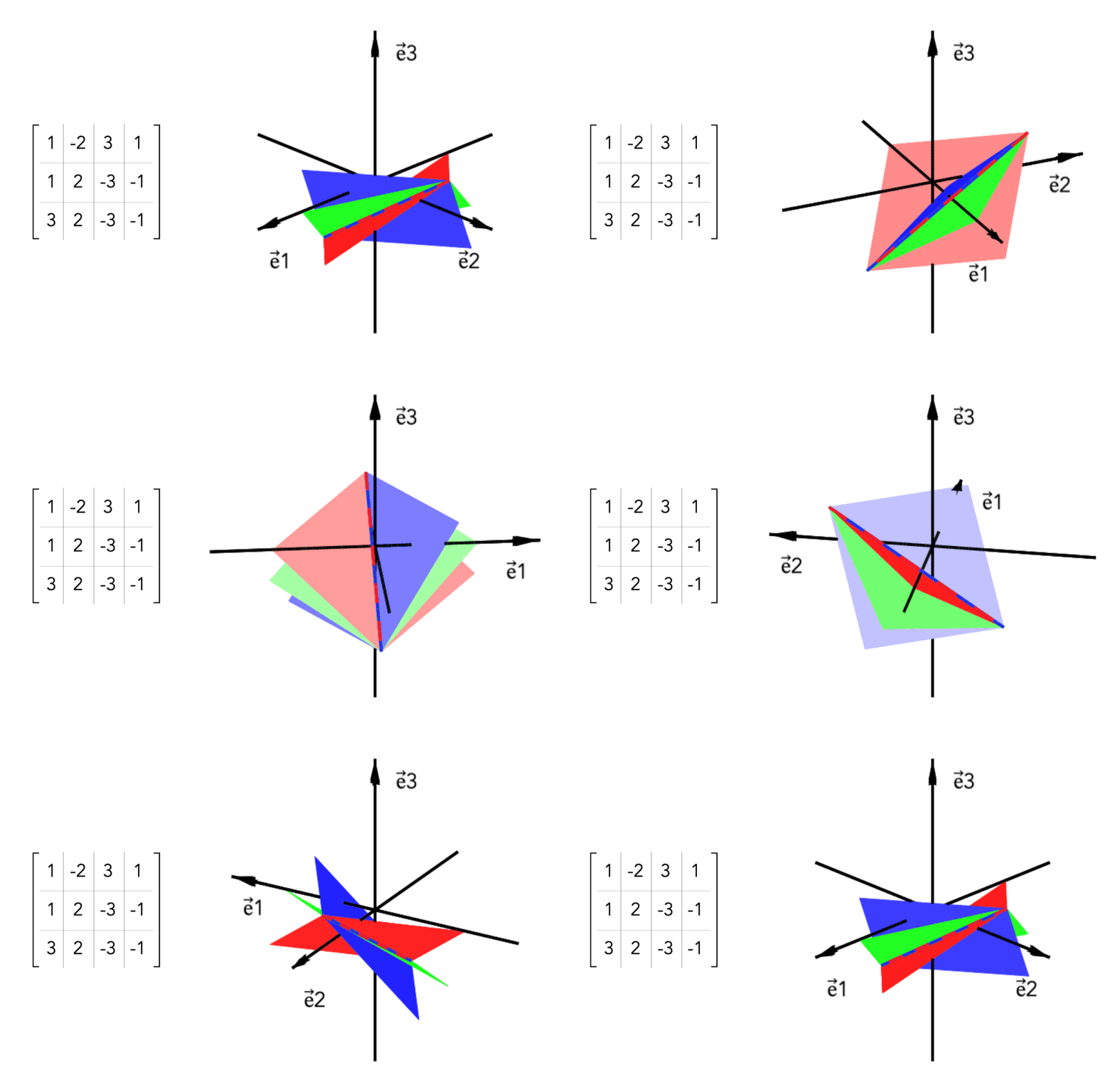
No solution in 3D
Two typical cases: two parallel planes cut by a third, or three non-parallel planes whose pairwise intersections are parallel lines
Chapter contents
The PDF is a single document. The page links below are best-effort: most browsers support them, but some viewers may ignore the page hint.
Why can row operations solve the system without changing the answer?
Because each elementary row operation preserves the set of solution vectors x. Swapping equations, scaling an equation by a nonzero number or replacing one equation by a linear combination of equations changes the form of the system, but not which vectors satisfy it.