Linear Equations — Unique, Infinite and No Solution Geometrically
A system of linear equations can be read geometrically as a collection of planes in 3D. Solving the system means finding whether those planes share a common point, share a common line or fail to meet in a common solution at all.
The examples below show the three main cases: a system with one solution, a system with infinitely many solutions and a system with no solution. Together they show how algebraic solvability and geometric intersection describe the same structure.
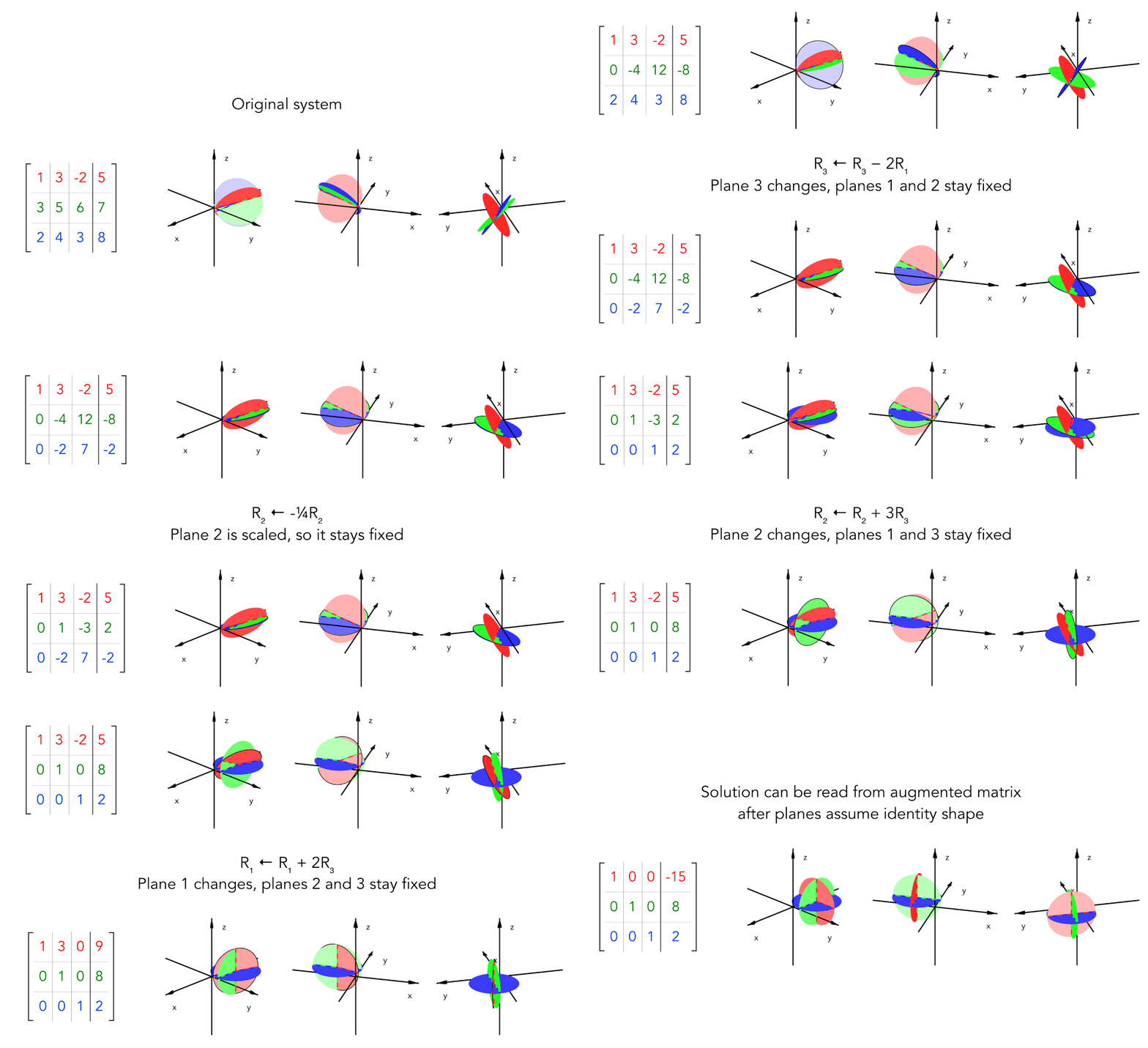
Overview of a 3D system
An augmented matrix [ A | b ] represents the full system in one object, while the corresponding planes show the same information geometrically. Looking at the matrix and the planes together helps connect symbolic row reduction with the geometry of intersections.
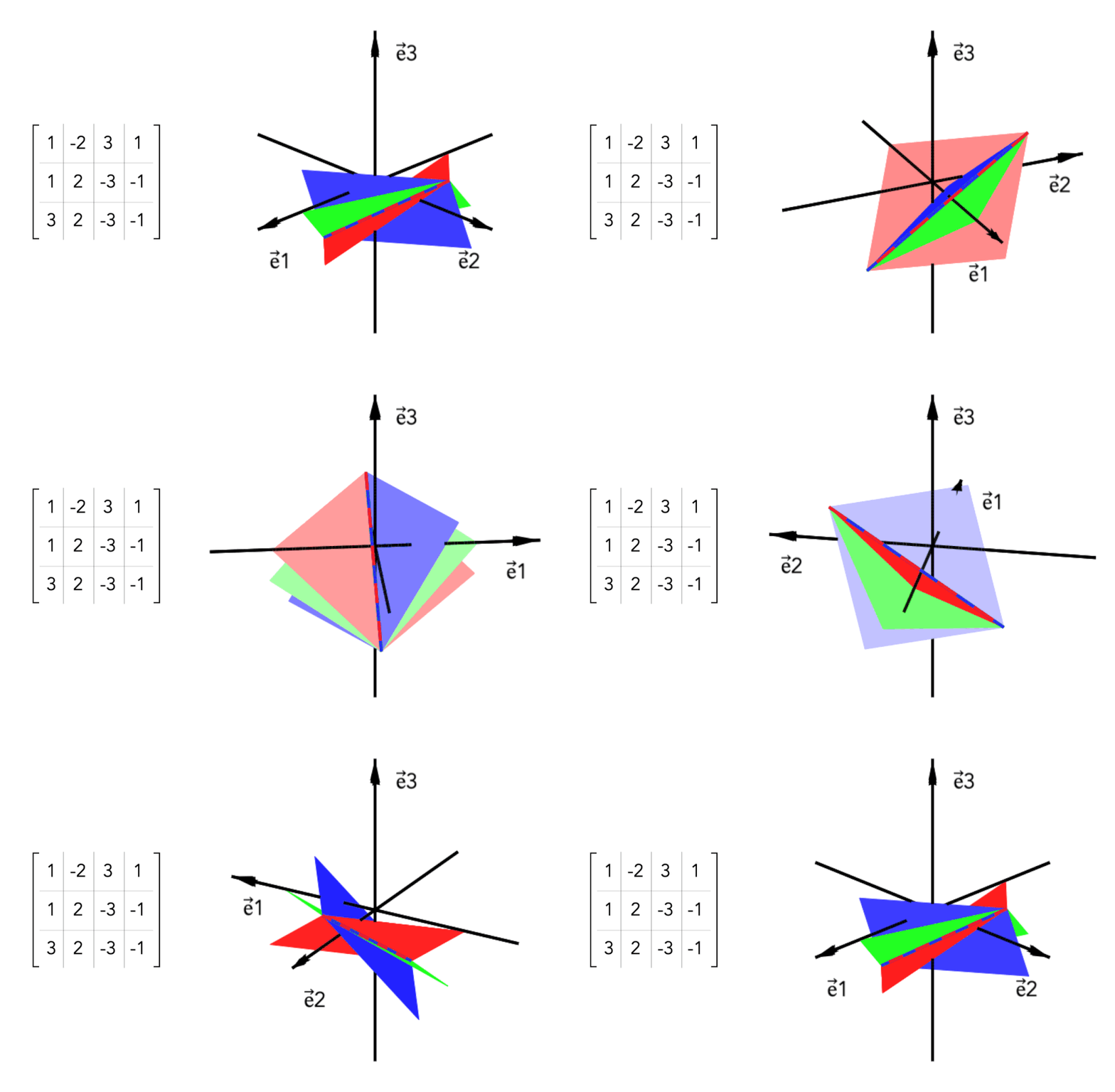
No solution
A system has no solution when the equations are mutually inconsistent, so the corresponding planes do not share a common point. In 3D, this can happen in several geometrically distinct ways.
Case 1: two planes are parallel, and the third plane cuts through both of them. Then the third plane intersects each of the parallel planes in a line, but those two lines are themselves parallel and distinct, so there is no common point shared by all three planes.
Case 2: no two planes are parallel, so each pair of planes intersects in a line. However, the three pairwise intersection lines are parallel to one another, so again there is no single point common to all three planes.
Case 3: all three planes are parallel. This case is also inconsistent, but it is not shown in the animation below.
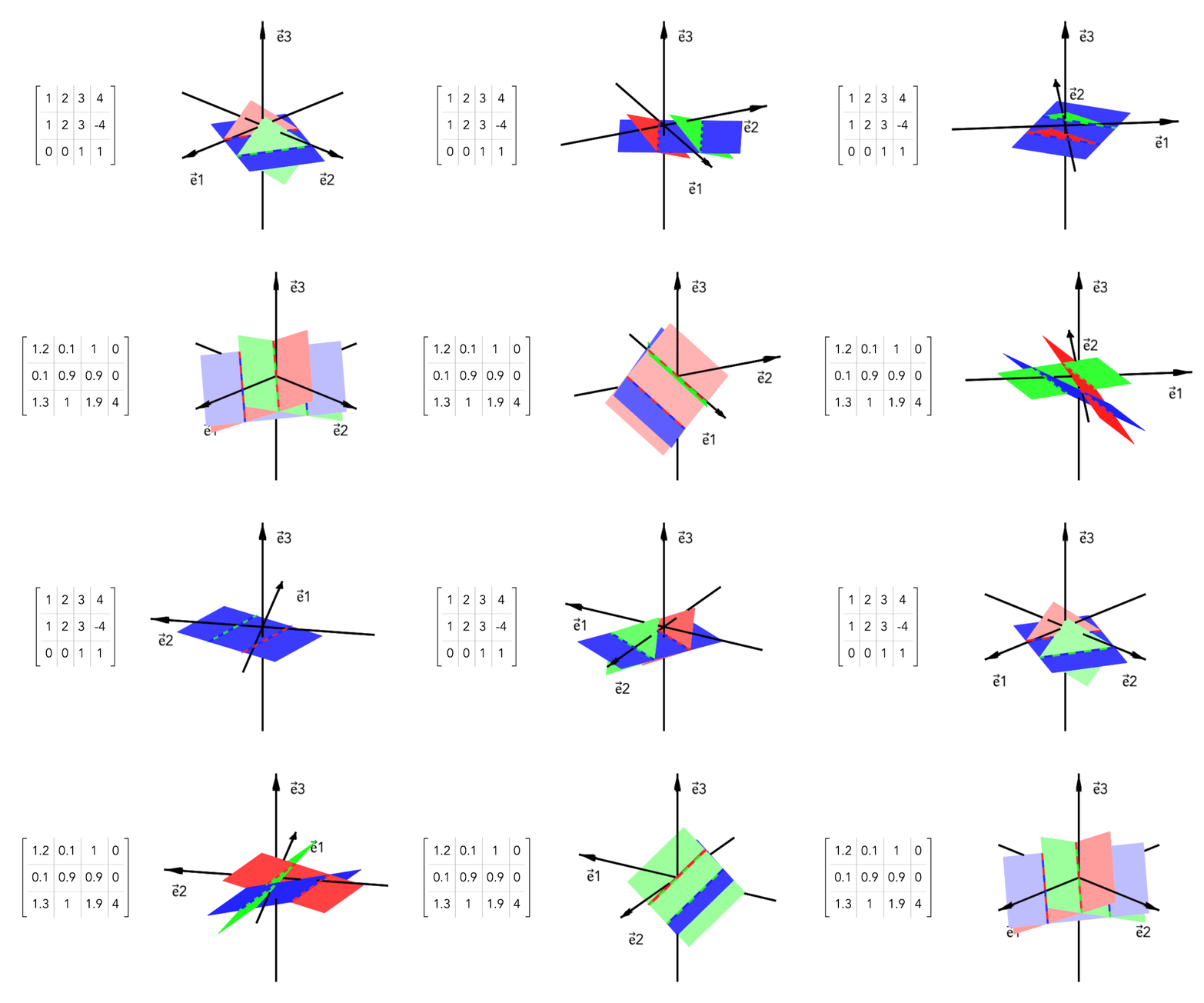
Infinitely many solutions
A system has infinitely many solutions when the equations leave one or more free directions unconstrained. In 3D, a common case is that three planes intersect along the same line. Every point on that line satisfies all equations, so the system has an infinite family of solutions.
Unique solution
A system has a unique solution when the equations constrain the unknown vector completely. In 3D, this happens when the planes meet in exactly one point. That single common point is the only vector that satisfies all equations simultaneously.
In reduced echelon form, the unique-solution case corresponds to having a pivot in every variable column and no contradictory row.
Concept
The equation A x = b asks whether the target vector b can be obtained from the columns of A, and the row view asks whether x satisfies all row constraints at once. These two viewpoints agree. The three solution cases are not separate tricks: they are the basic outcomes of how constraints interact.
Reduced row echelon form makes those cases explicit algebraically, while the plane pictures make them explicit geometrically.
Key equations
These are the same three cases seen from algebra and geometry together.
Query phrases
- linear equations geometric interpretation
- unique solution no solution infinitely many solutions geometry
- planes in 3D linear system
- how to see solution types of Ax = b geometrically
- augmented matrix and planes in 3D
References
Related chapter: Linear Equations