Givens Rotation Algorithm — Geometric Interpretation in 3D
The Givens rotation algorithm applies a sequence of rotations in coordinate planes to eliminate selected entries of a matrix one at a time. Each step acts only in a two-dimensional coordinate plane, so the transformation is local and targeted rather than global.
In QR factorization, these rotations are used to turn a matrix into an upper triangular form. Geometrically, each rotation reorients the columns just enough to zero one chosen entry while preserving lengths and orthogonality properties.
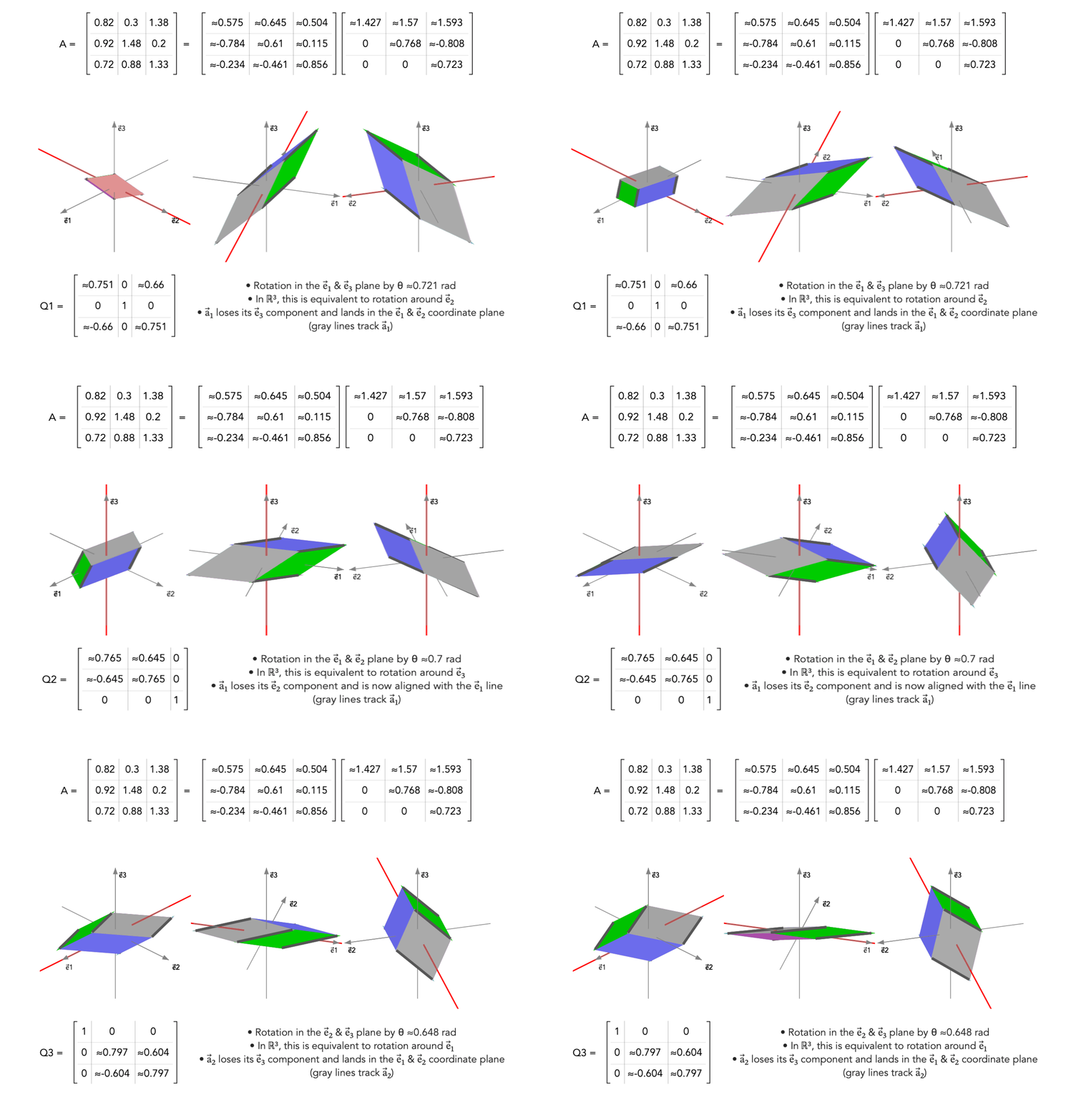
Givens rotation algorithm visualized as solid cubes
This animation shows the full three-rotation Givens process for a 3D QR factorization. Each rotation acts in one coordinate plane, eliminates one selected entry and moves the matrix step by step toward upper triangular form.
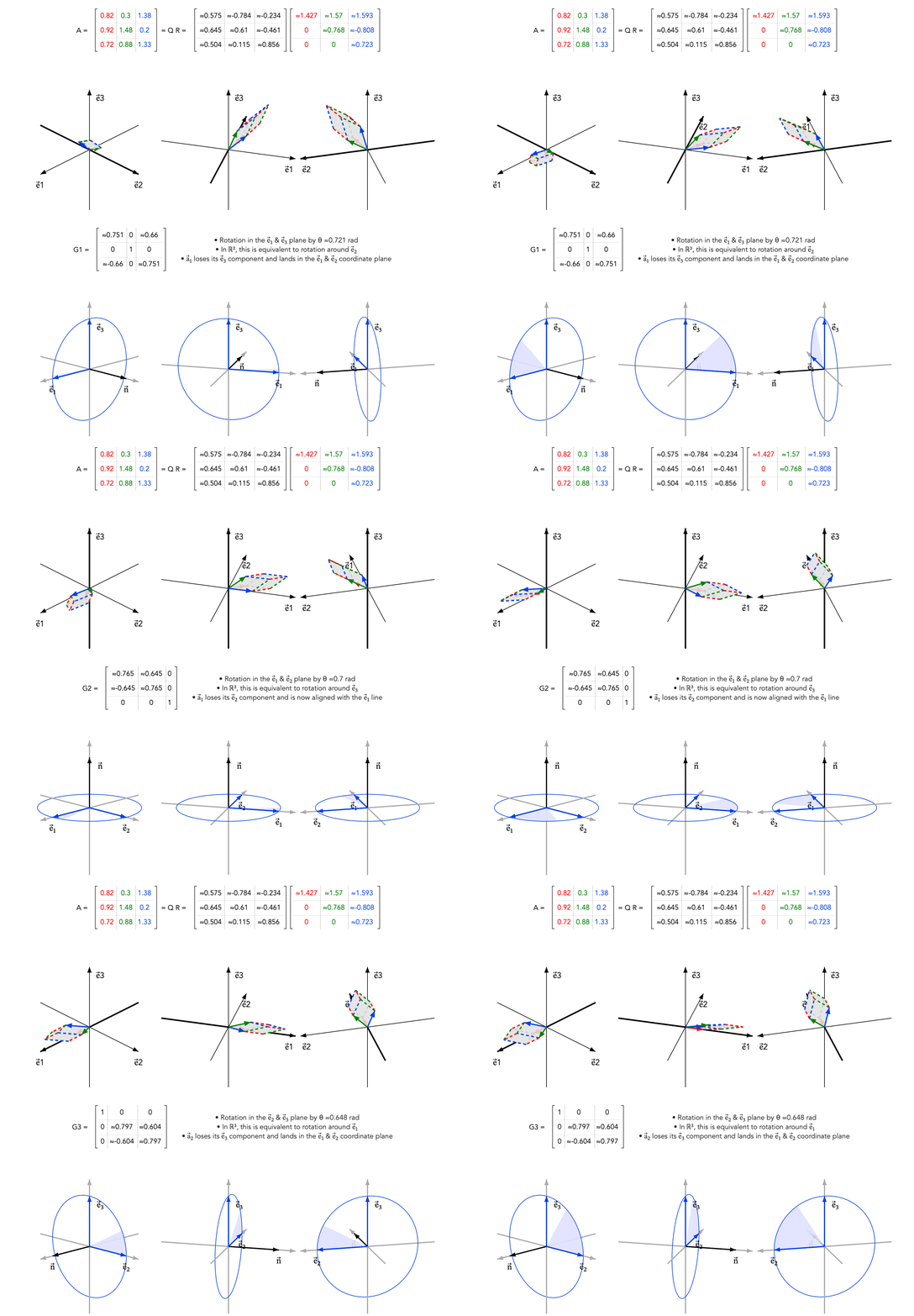
Givens rotation algorithm visualized as semi-transparent cubes (same matrix)
This animation shows the same full three-rotation process with a different visual representation. Semi-transparent cubes with coordinates in the interval [0, 1] make the destination of the vectors easier to visualize.
Concept
A Givens rotation is an orthogonal transformation that mixes only two coordinates and leaves the others unchanged. In matrix language, it is almost the identity matrix, except for a 2×2 rotation block.
This makes the algorithm especially useful when one wants to eliminate entries one at a time, or when the matrix is sparse and it is better not to disturb more structure than necessary.
Structure
Suppose we want to eliminate an entry below the diagonal. We choose a rotation in the coordinate plane determined by the two relevant rows so that the target entry becomes zero after multiplication. Repeating that process systematically transforms the matrix toward upper triangular form.
In QR factorization, the product of all these Givens rotations gives the orthogonal factor, while the transformed matrix becomes the triangular factor.
Key equations
Each step is small, but the accumulated effect produces the full QR factorization.
Query phrases
- Givens rotation algorithm geometric interpretation
- how Givens rotations build QR decomposition
- Givens rotation in 3D
- plane rotation to zero a matrix entry
- Givens rotation visualization
References
Related concept: GraphMath — QR Decomposition, Geometric Interpretation in 2D and 3D
Related concept: GraphMath — Gram-Schmidt Orthogonalization, Stepwise Visualization in 2D and 3D
Related chapter: GraphMath — Givens rotations