Eigenvectors and Eigenvalues Across 2D Transformations
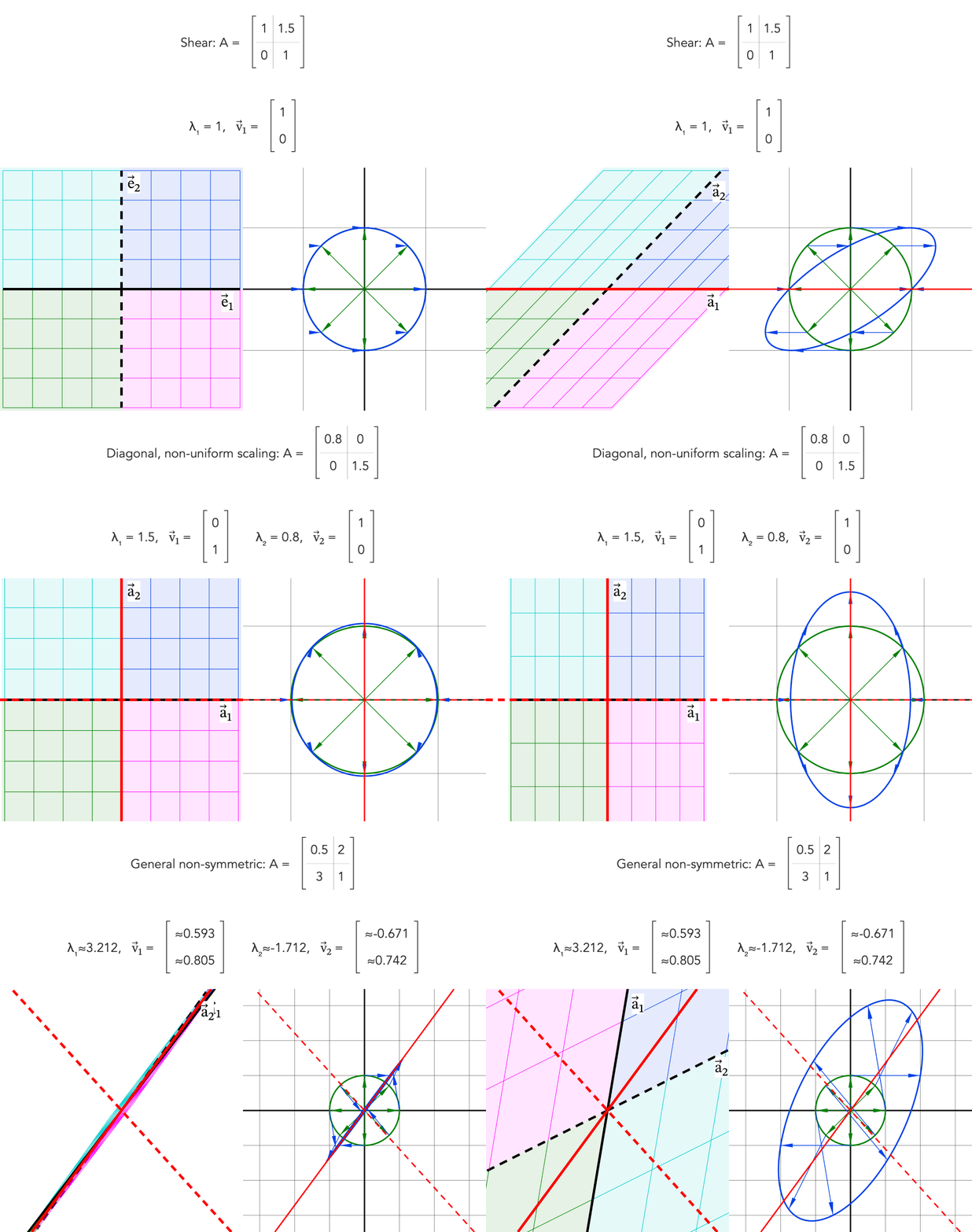
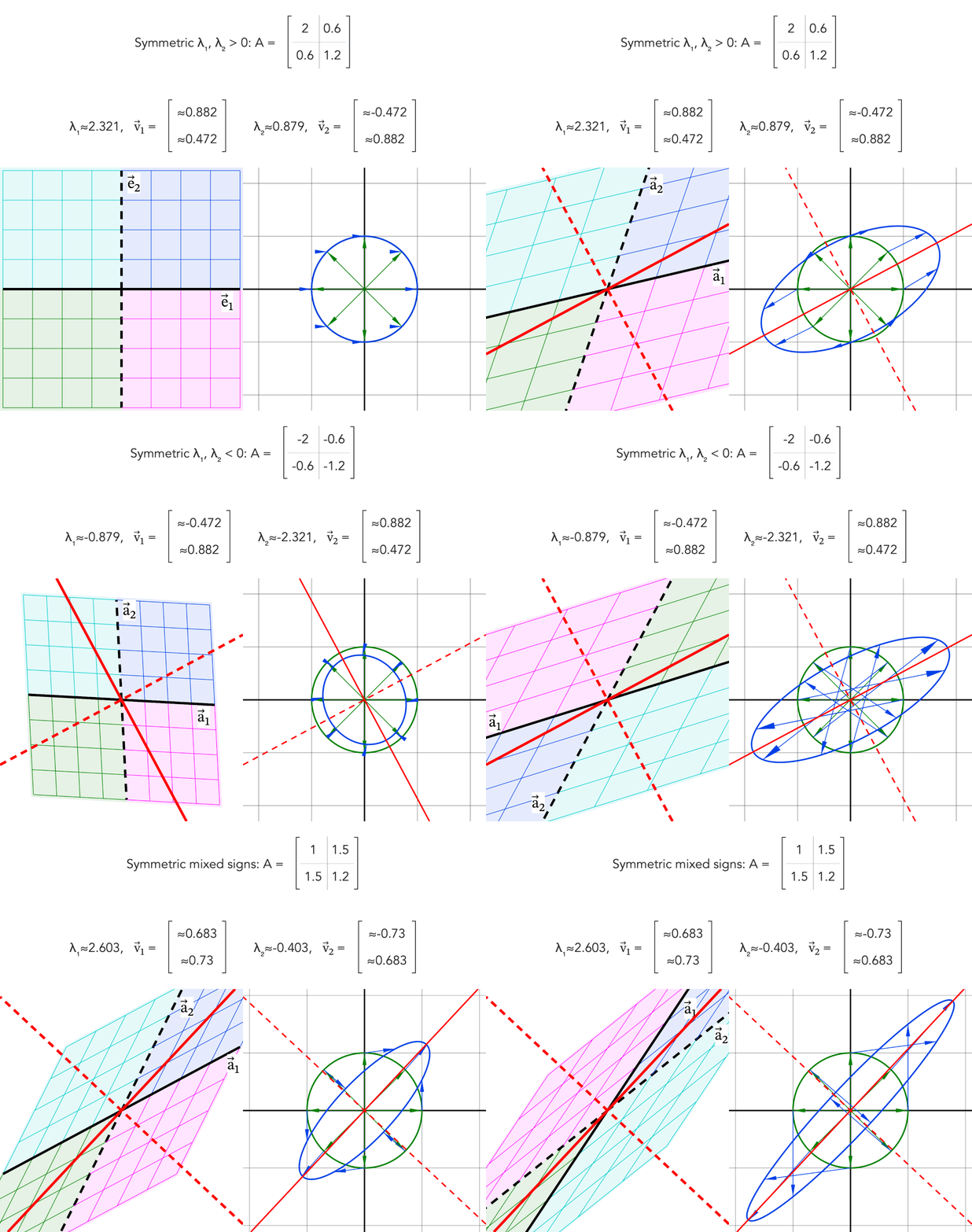
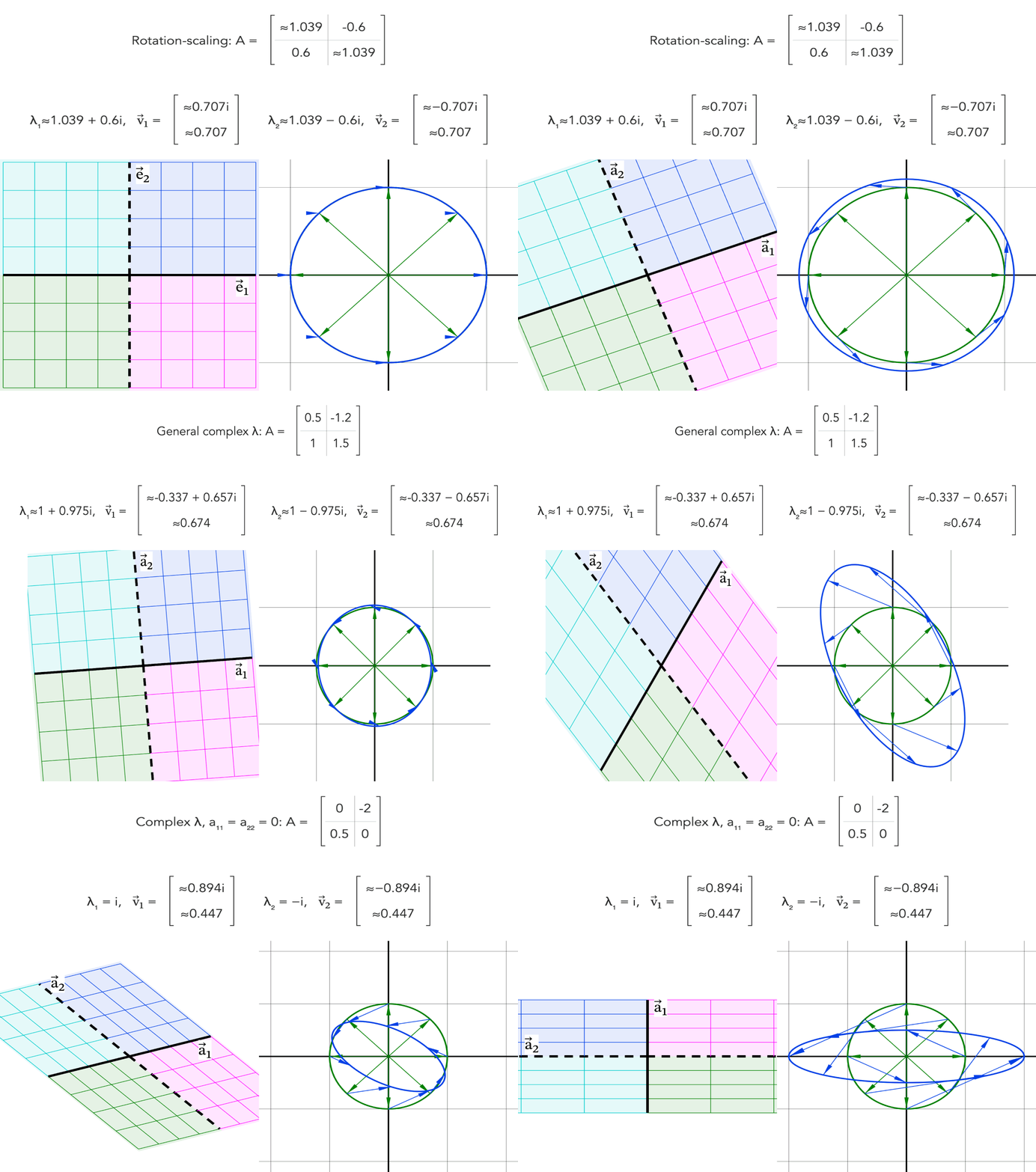
The equation A x⃗ = λx⃗ describes a direction that remains on the same line under a linear transformation. The animations below compare three broad types of 2D behavior: non-symmetric matrices with real eigenvalues, symmetric matrices with real eigenvalues, and real matrices whose eigenvalues and eigenvectors are complex.
Animated examples
Concept
A real eigenvector remains on the same line because its image is a scalar multiple of the original vector. A positive eigenvalue preserves its orientation, a negative eigenvalue reverses it, and a zero eigenvalue collapses it to the zero vector.
When the eigenvalues of a real 2D matrix are complex, no nonzero real vector satisfies the eigenvector equation. Geometrically, the transformation turns every real direction away from its original line.
Structure
Non-symmetric matrices may have real eigenvector directions that are not orthogonal. Real symmetric matrices always have real eigenvalues and can be described using orthogonal eigenvector directions. Real matrices with complex eigenvalues have no real invariant line.
Key equations
If x⃗ is an eigenvector of A, then it remains an eigenvector of every interpolated matrix:
Query phrases
- animated eigenvector visualization
- eigenvalue animation
- eigenvectors in 2D transformations
- symmetric matrix eigenvectors animation
- non-symmetric matrix eigenvectors
- complex eigenvalues visualization
- matrices with no real eigenvectors
- rotation-scaling eigenvalues